
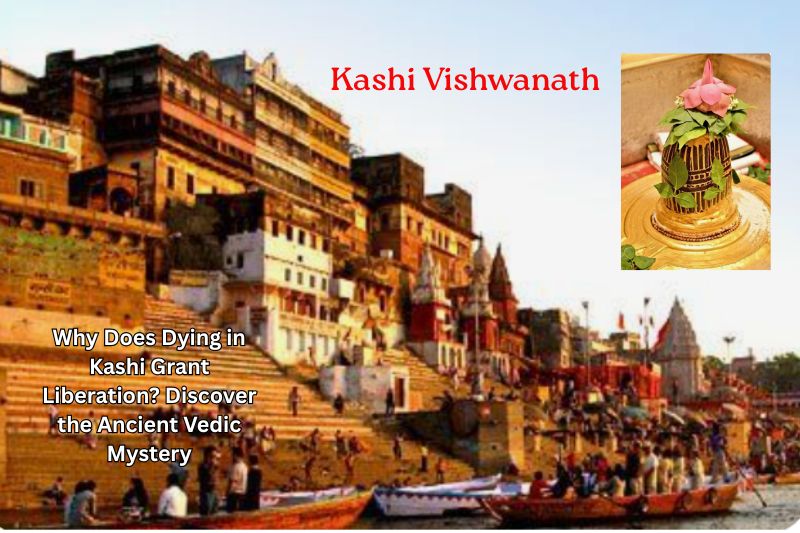
Where Death Itself Becomes a Celebration
Kashi – India’s most ancient and mysterious city – where every sunrise on the Ganges ghats brings new hope, and every evening, cremation pyres illuminate the path to moksha (liberation). Here, death is not feared but embraced as the gateway to ultimate freedom. Have you ever wondered why millions wish to spend their final days in Kashi? Why is it said that “Kashyam Maranam Mukti” – dying in Kashi is liberation itself?
This is not merely a religious belief but a spiritual tradition spanning thousands of years, deeply rooted in the Vedas, Puranas, and ancient Sanskrit texts.
Archaeological Antiquity of Kashi: The World’s Oldest Living City
Archaeological evidence reveals that Kashi is approximately 3,500 to 5,000 years old. Excavations at Ramnagar and Akatha near Varanasi have unearthed artifacts dating back to 1800 BCE, confirming habitation during this period. This makes it one of the world’s oldest continuously inhabited cities.
Historical documents indicate that during the Gupta period (320-550 CE), the Kashi Vishwanath Temple achieved its magnificent form. Though the temple was destroyed multiple times – by Qutb-ud-din Aibak in 1194 and by Aurangzeb in 1669 – it was rebuilt each time. The present structure was constructed by Maharani Ahilyabai Holkar in 1780.
Vedic and Puranic Evidence: Why Is Kashi Considered Lord Shiva’s Abode?
Kashi Khand in Skanda Purana
The Kashi Khand section of the Skanda Purana contains over 15,000 verses glorifying Kashi. The Purana states:
Sanskrit Verse:
“Na tatra yamadūtānām praveśo’sti kadācana |
Kāśīkṣetre mahādevo yatra sākṣāt vyavasthitaḥ ||”
Meaning: Where Lord Mahadeva himself resides, the messengers of death (Yamadūtas) can never enter. In Kashi, the god of death, Yama, has no authority.
Another significant verse:
“Maṇḍūkamatyāḥ kṛmayo’pi kāśyāṃ tyaktvā śarīraṃ śivamāpnuvanti |”
Meaning: Even frogs, fish, or insects that die in Kashi attain Shiva – meaning they achieve moksha.
Description in Shiva Purana
The Shiva Purana describes Kashi as “Anandakanan” – the forest of bliss. It states that this place is Lord Shiva’s eternal abode, and even during the cosmic dissolution (Pralaya), this city remains safe on Shiva’s trident.
The Mystery of Taraka Mantra: What Does Shiva Whisper at the Time of Death?
According to Hindu scriptures, Lord Shiva himself whispers the “Taraka Mantra” into the ear of every person dying in Kashi. This mantra helps the soul cross the ocean of worldly existence (the cycle of birth and death).
What Is the Taraka Mantra?
Various scriptures identify it as the “Ram Naam” (Name of Lord Rama). The Shiva Purana mentions:
“Rāmarāmeti rāmeti madhuraṃ sphuṭamacyutam |
Kāśīkṣetre parityajya dehī mucyeta bandhanāt ||”
Meaning: One who leaves the body in Kashi while uttering “Ram Ram” becomes free from all bondages.
It is remarkable that Lord Shiva, who is himself the supreme reality, utters the name of Lord Rama (Vishnu) at the time of death – symbolizing unity and harmony.
Scientific and Spiritual Perspective on Moksha in Kashi
Center of Spiritual Energy
Kashi is considered the site of a “Jyotirlinga” – an infinite pillar of light. The land here is believed to possess special spiritual vibrations. Thousands of years of yajnas (sacred rituals), mantra chanting, and penance have filled this place with transcendental energy.
Significance of the Ganges
Scientific research indicates that Ganges water contains special elements called bacteriophages that keep the water pure. From a spiritual perspective, the Ganges is called “Patit-Pavani” – the purifier of sinners.
Ayurveda also recognizes the medicinal properties of Ganges water. Performing last rites on the ghats of Kashi and immersing ashes in the Ganges is considered a means to attain moksha.
Mukti Bhawan: Where People Come to Die
Varanasi has a unique place called “Kashi Labh Mukti Bhawan” (House of Liberation), where people come to spend their final days. Established in 1908, this facility allows stays of only 15 days – based on the belief that those who come with true devotion attain liberation within this period.
This place is unique in the world – here, death is not mourned but seen as the soul’s liberation.
Kashi Vishwanath Temple: Architecture and Spiritual Significance
The present temple structure features a spire plated with 800 kilograms of gold, donated by Maharaja Ranjit Singh in 1839. The temple complex has a 52-foot-high spire.
The sanctum sanctorum houses the Kashi Vishwanath Jyotirlinga – one of the 12 Jyotirlingas. Worship here follows ancient Vedic traditions.
Kashi Vishwanath Corridor Project 2021
Recently, the Indian government developed the Kashi Vishwanath Corridor, expanding the temple complex and enhancing facilities for devotees. This represents a beautiful confluence of modernity and tradition.
Cultural and Historical Background of Kashi
Kashi is not merely a religious site but has been a center of Indian culture, music, art, and knowledge. Tulsidas composed the Ramcharitmanas here. Great saints like Kabir and Ravidas attained enlightenment in this city.
Kashi hosts countless gurukuls and schools teaching the Vedas, Upanishads, and Yoga. It is also home to modern educational institutions like Banaras Hindu University (BHU).
FAQs: What People Want to Know About Kashi
Question 1: Does dying in Kashi truly grant moksha?
Answer: According to religious belief, yes. However, merely dying in Kashi is not enough – devotion, faith, and a pure life are also essential. Moksha comes through the purity of the soul and Lord Shiva’s grace.
Question 2: What is the Taraka Mantra and who can hear it?
Answer: The Taraka Mantra is “Ram Naam,” which Lord Shiva whispers to the soul at the time of death. This occurs on a subtle level and is heard only by the departing soul.
Question 3: What are the main ghats in Kashi?
Answer: Dashashwamedh Ghat, Manikarnika Ghat (cremation ghat), Assi Ghat, and Panchganga Ghat are prominent. Manikarnika Ghat is considered the most sacred cremation ground.
Question 4: Is Kashi important only for Hindus?
Answer: While Kashi is a major Hindu pilgrimage site, it also has important Buddhist, Jain, and Islamic sites. The city symbolizes cultural harmony.
Question 5: What is the best time to visit Kashi?
Answer: October to March (winter) is most suitable. Special spiritual experiences occur during Maha Shivaratri, Dev Deepawali, and Kartik Purnima.
Conclusion: Kashi – Where Time Stands Still
Kashi is not merely a geographical location but a spiritual experience. Here, life and death, materialism and spirituality, antiquity and modernity – all flow together. Sitting on the Ganges ghats watching the aarti, hearing temple bells in narrow alleys, and experiencing the unbroken stream of devotion flowing for thousands of years – this experience transcends words.
Whether you are a believer or a rationalist, Kashi offers you an opportunity to look within yourself. Here, death is not terrifying but a gateway to liberation. And perhaps this is Kashi’s greatest mystery – it teaches us that death is not the end but the beginning of a new journey.
Must Read –

