The Great Night of Lord Shiva
Maha Shivratri, meaning “The Great Night of Shiva,” stands as one of the most sacred and spiritually significant festivals in Hinduism. Celebrated annually in honor of Lord Shiva, this auspicious night holds profound meaning for millions of devotees worldwide. In 2026, Maha Shivratri will be observed on Saturday, February 15, marking a particularly powerful alignment as the festival falls on Saturn’s day-the planet whose deity is Lord Shiva himself.
This comprehensive guide covers everything you need to know about Maha Shivratri 2026, including precise muhurat timings, traditional puja rituals, fasting guidelines, mythological stories, and the spiritual significance of this transformative night.
Maha Shivratri 2026: Date and Auspicious Timings
Key Date Information
Main Festival Date: Saturday, February 15, 2026
Chaturdashi Tithi (14th Lunar Day) Timings:
- Begins: February 14, 2026, at approximately 2:30 PM
- Ends: February 15, 2026, at approximately 12:15 PM
Nishita Kaal Puja Muhurat (Most Auspicious)
The Nishita Kaal represents the most powerful time for Shiva worship during Maha Shivratri. This is the midnight hour when cosmic energies are at their peak.
Nishita Kaal Timing for 2026:
- Date: February 15, 2026 (Saturday)
- Time: 12:05 AM to 12:55 AM
- Duration: 50 minutes
This is considered the most spiritually potent time for performing Rudrabhishek and offering prayers to Lord Shiva.
Four Prahar Puja Timings
Traditional Shivratri worship is divided into four prahars (time periods) throughout the night, each representing different aspects of spiritual practice:
First Prahar: 6:30 PM to 9:30 PM (Evening)
- Focus: Initial worship and Abhishek
Second Prahar: 9:30 PM to 12:30 AM (Late Night)
- Focus: Deep meditation and mantra chanting
Third Prahar: 12:30 AM to 3:30 AM (Midnight)
- Focus: Nishita Kaal rituals and intense devotion
Fourth Prahar: 3:30 AM to 6:30 AM (Pre-dawn)
- Focus: Final offerings and Aarti
Devotees who observe the complete vigil (Jagaran) perform worship during all four prahars, staying awake throughout the night in spiritual communion with Lord Shiva.
The Spiritual Significance of Maha Shivratri
Why Maha Shivratri is Celebrated
Maha Shivratri commemorates several pivotal events in Hindu cosmology:
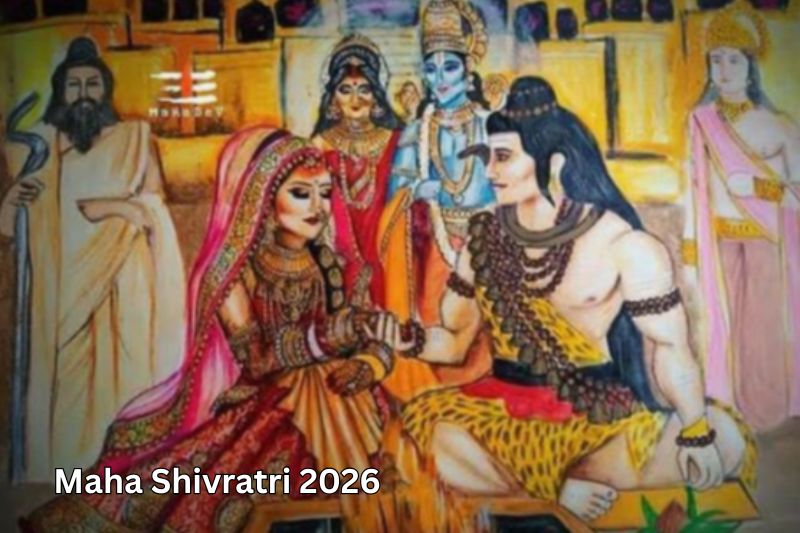
- The Divine Marriage: This night marks the celestial wedding of Lord Shiva and Goddess Parvati, symbolizing the union of consciousness (Shiva) and energy (Shakti).
- The Cosmic Dance: It celebrates the night when Shiva performed the Tandava-the cosmic dance of creation, preservation, and destruction.
- The Manifestation of the Jyotirlinga: The night when Shiva appeared as an infinite pillar of light, revealing his formless, eternal nature.
- The Poison-Drinking Episode: Commemorates Shiva’s act of consuming the deadly Halahala poison during the churning of the cosmic ocean (Samudra Manthan) to save the universe.
The Philosophy Behind Shivratri
Unlike most Hindu festivals that celebrate light and brightness, Shivratri honors the dark night-representing the dissolution of ego and the journey into the inner consciousness. It teaches us that:
- Darkness precedes light: Spiritual awakening often comes through facing our inner darkness
- Death leads to rebirth: Shiva as the destroyer makes way for new creation
- Transcendence over duality: Shiva represents the state beyond good and evil, pleasure and pain
Special Significance of Maha Shivratri 2026
Saturday Alignment: A Rare Blessing
The year 2026 brings a particularly auspicious configuration as Maha Shivratri falls on Saturday (Shanivar)-the day ruled by Lord Shani (Saturn). This alignment is considered extremely powerful because:
- Shani’s Devotion to Shiva: In Hindu tradition, Lord Shani regards Shiva as his supreme deity and guru.
- Relief from Sade Sati: Devotees undergoing Sade Sati (7.5-year Saturn transit) or Dhaiyya (2.5-year Saturn transit) can receive special relief through sincere worship on this day.
- Karmic Resolution: Saturday Shivratri is believed to accelerate the resolution of karmic debts and ancestral issues.
Astrological Configuration
Sun’s Position: The Sun will be transiting through Aquarius (Kumbh Rashi), creating favorable conditions for spiritual practices.
Pradosh Kaal Alignment: The Chaturdashi tithi coincides with the twilight period (Pradosh Kaal), amplifying the spiritual potency of the occasion.
Mythological Origins and Sacred Stories
The Samudra Manthan: When Shiva Saved the Universe
One of the most celebrated stories associated with Shivratri is the Churning of the Ocean of Milk (Samudra Manthan):
The Story:
When gods (Devas) and demons (Asuras) churned the cosmic ocean to obtain the nectar of immortality (Amrit), the first substance to emerge was Halahala-a deadly poison capable of destroying all creation. As the universe faced annihilation, all beings turned to Lord Shiva for help.
In his infinite compassion, Shiva consumed the entire poison to save the world. However, Goddess Parvati, fearing for her consort’s life, held his throat to prevent the poison from descending. The poison remained in Shiva’s throat, turning it blue, earning him the name Neelkanth (the blue-throated one).
This selfless act of consuming poison symbolizes Shiva’s role as the ultimate protector who absorbs negativity to preserve cosmic balance.
The Jyotirlinga Manifestation
The Cosmic Competition:
Once, a dispute arose between Lord Brahma (the creator) and Lord Vishnu (the preserver) about who was supreme. As their argument intensified, Lord Shiva manifested as an infinite pillar of blazing light (Jyotirlinga) that extended endlessly in both directions.
Shiva challenged them: “Whoever finds either end of this light shall be proven supreme.”
Brahma transformed into a swan and flew upward, while Vishnu became a boar and dug downward. After searching for thousands of years, Vishnu humbly admitted defeat, recognizing the limitless nature of Shiva. However, Brahma falsely claimed to have found the top, presenting a Ketaki flower as false evidence.
For his dishonesty, Brahma was cursed to have no temples dedicated to him, while Vishnu’s humility earned Shiva’s blessings. This manifestation on Maha Shivratri represents Shiva’s formless, infinite essence beyond all comprehension.
The Hunter’s Accidental Devotion
A Tale of Unintentional Worship:
This story illustrates how sincere devotion, even if unknowing, pleases Lord Shiva:
A poor hunter, lost in the forest during Shivratri night, climbed a Bilva tree (wood apple) for safety from wild animals. To stay awake and alert, he began plucking leaves and dropping them below. Unknown to him, there was a Shiva Lingam directly beneath the tree.
Throughout the night, the Bilva leaves fell upon the Lingam-each leaf an offering that is most dear to Shiva. His movements caused dew drops to fall, performing an unintentional Abhishek. By dawn, through this accidental but continuous worship, the hunter had pleased Lord Shiva immensely.
When the god of death came to claim his life (as per his karma), Shiva’s attendants protected him. Shiva himself appeared, blessing the hunter with spiritual enlightenment and liberation.
The Lesson: This story teaches that purity of being and sincere devotion matter more than elaborate rituals. Shiva accepts the simplest offerings when given with genuine feeling.
Vedic and Puranic Foundations
Shiva in the Vedas and Upanishads
Rigveda References:
Shiva appears in the Vedas as Rudra-the fierce, storm-like deity who both destroys and heals. The Shri Rudram hymn from the Yajurveda contains 108 names of Rudra, describing him as the cosmic physician and the source of supreme consciousness.
Upanishadic Wisdom:
The Shvetashvatara Upanishad declares: “Shiva is the beginning, middle, and end of all existence.” It describes Shiva as the ultimate reality (Brahman) beyond form and attributes.
References in Major Puranas
Shiva Purana:
Dedicates extensive chapters to Maha Shivratri, describing its observance, benefits, and the cosmic events associated with this night.
Linga Purana:
Explains the philosophy of the Lingam as the symbol of formless reality and details the manifestation of the twelve Jyotirlingas.
Skanda Purana:
Contains regional variations of Shivratri celebrations and describes pilgrimage to sacred Shiva temples.
Scientific and Astronomical Basis
The Lunar Calendar and Planetary Alignment
New Moon Significance:
Maha Shivratri falls on the Chaturdashi (14th day) of the dark lunar fortnight-one day before the New Moon (Amavasya). Scientific studies suggest that:
- Gravitational Effects: The moon’s position influences Earth’s gravitational field, potentially affecting human physiology and consciousness.
- Minimal Moonlight: The near-absence of moonlight creates ideal conditions for deep meditation and inner focus.
- Natural Rhythms: Ancient observers noted that this particular day aligns with natural biological rhythms conducive to spiritual practices.
Health Benefits of Night Vigil
Circadian Reset:
Modern research indicates that occasional all-night wakefulness can:
- Reset circadian rhythms
- Boost mental clarity
- Enhance metabolic processes
- Promote cellular regeneration during the subsequent rest period
Fasting Benefits:
The practice of fasting on Shivratri aligns with contemporary understanding of:
- Autophagy: Cellular cleansing during fasting periods
- Metabolic Switching: Enhanced fat burning and energy efficiency
- Mental Clarity: Reduced digestive load allows greater blood flow to the brain
Sound Science and Mantra Power
Vibrational Healing:
The chanting of “Om Namah Shivaya” and other Shiva mantras creates specific sound vibrations that:
- Resonate with Body Systems: Different frequencies affect various organs and energy centers
- Calm Neural Activity: Repetitive chanting activates the parasympathetic nervous system
- Synchronize Brain Waves: Group chanting creates coherent brain wave patterns among participants
The Om Frequency:
Research shows that the vibration of “Om” (when properly pronounced) resonates at approximately 432 Hz-a frequency found throughout nature and considered harmonious to biological systems.
Complete Puja Vidhi: Step-by-Step Worship Procedure
Essential Puja Items (Samagri)
Primary Items:
- Shiva Lingam or Shiva idol
- Fresh Bilva (Bael) leaves – at least 108
- Ganga water (or pure water)
- Raw milk
- Yogurt (curd)
- Pure ghee (clarified butter)
- Honey
- Sugar or sugarcane juice
- Sandalwood paste
- White flowers (especially Datura, if available)
- Sacred thread (Janeu)
- Incense sticks (Agarbatti)
- Camphor
- Diya (lamp) with ghee or oil
- Fruits for offering
- Panchamrit (mixture of milk, curd, honey, ghee, and sugar)
- Kumkum and Haldi (turmeric)
- Rice grains (Akshat)
- Betel leaves and nuts
- Rudraksha mala (optional but recommended)
Preparation Before Puja
Physical Cleansing:
- Take a ritual bath (preferably before sunrise or in the evening)
- Wear clean, preferably new or white clothes
- Clean the puja area thoroughly
- Arrange all materials systematically
Mental Preparation:
- Begin with a few minutes of silent meditation
- Set your intention (Sankalp) for the worship
- Cultivate feelings of devotion and surrender
Step-by-Step Puja Procedure
Step 1: Sankalp (Taking the Vow)
Hold water, rice, and a flower in your right palm. State your intention:
“I, [your name], resident of [place], on this sacred night of Maha Shivratri, resolve to worship Lord Shiva with complete devotion, observing fasting and night vigil for spiritual growth and divine blessings.”
Release the water and rice at the base of the Lingam or idol.
Step 2: Pranayama and Meditation (5-10 minutes)
Perform basic breathing exercises to calm the mind and center yourself.
Step 3: Invocation (Avahan)
With folded hands, invoke Lord Shiva:
“Om Namah Shivaya! O Lord Shiva, Mahadeva, Neelkanth, Nataraja-please grace this humble space with your divine presence. Accept my offerings and bless me with your darshan.”
Step 4: Rudrabhishek (Sacred Bathing of the Lingam)
This is the most important ritual of Shivratri. Perform Abhishek with the following items in sequence:
Water Abhishek:
- Pour pure water or Ganga water while chanting: “Om Namah Shivaya”
- Symbolizes purification of sins
Milk Abhishek:
- Pour raw milk over the Lingam
- Chant: “Om Someshwaraya Namaha”
- Symbolizes nurturing and sustenance
Yogurt Abhishek:
- Pour fresh yogurt
- Chant: “Om Rudraya Namaha”
- Represents prosperity and progeny
Ghee Abhishek:
- Pour pure clarified butter
- Chant: “Om Mrityunjayaya Namaha”
- Symbolizes moksha (liberation)
Honey Abhishek:
- Pour pure honey
- Chant: “Om Shivaya Namaha”
- Represents sweet speech and harmonious relationships
Sugar Water/Sugarcane Juice Abhishek:
- Pour sugar solution or fresh sugarcane juice
- Chant: “Om Sadashivaya Namaha”
- Symbolizes sweetness in life
After each Abhishek, gently clean the Lingam with water.
Step 5: Offering Bilva Leaves
The Bilva (Bael) leaf is Lord Shiva’s most beloved offering. Each leaf should have three leaflets intact.
How to Offer:
- Take one Bilva leaf (three leaflets together)
- Hold it with both hands at your heart
- Chant: “Tridalam Trigunakaram Trinetraya Trikarmane | Trijanma Papa Samharam Eka Bilvam Shivarpane ||”
Translation: “I offer this Bilva leaf with three leaves to Lord Shiva, who has three eyes and performs three actions (creation, preservation, destruction). May this offering destroy the sins of my past three births.”
- Gently place the leaf on the Lingam
- Repeat this at least 108 times (or as many as you can with devotion)
Step 6: Shodashopachara Puja (16-Step Worship)
- Dhyana (Meditation): Visualize Lord Shiva’s form
- Asana (Seat): Offer a symbolic seat
- Padya (Washing feet): Offer water for washing feet
- Arghya (Water offering): Offer water for hands
- Achamana (Sipping water): Offer water for sipping
- Snana (Bath): Already completed through Abhishek
- Vastra (Clothes): Offer clean cloth or sacred thread
- Yajnopaveeta (Sacred thread): Offer sacred thread
- Gandha (Sandalwood): Apply sandalwood paste
- Pushpa (Flowers): Offer white flowers
- Dhupa (Incense): Light incense sticks
- Deepa (Lamp): Light the ghee lamp
- Naivedya (Food offering): Offer fruits and sweets
- Tambula (Betel): Offer betel leaves and nuts
- Dakshina (Offering): Symbolic monetary offering
- Pradakshina & Namaskara: Circumambulate (mentally if space is limited) and bow down
Step 7: Mantra Chanting
Primary Mantras to Chant:
Panchakshari Mantra (108 times):
“Om Namah Shivaya”
Mahamrityunjaya Mantra (11, 21, or 108 times):
“Om Tryambakam Yajamahe Sugandhim Pushtivardhanam |
Urvarukamiva Bandhanan Mrityor Mukshiya Maamritat ||”
Translation: “We worship the three-eyed Lord Shiva who nourishes and increases health. Like a ripe cucumber freed from its vine, may we be liberated from death and granted immortality.”
Shiva Tandava Stotram (if you know it): This powerful hymn describes Shiva’s cosmic dance
Step 8: Aarti (Wave of Light)
Light camphor on a small plate and sing the Shiva Aarti:
“Jai Shiv Omkara, Har Shiv Omkara |
Brahma Vishnu Sadashiv, Ardhangi Dhara ||”
Continue with the complete Aarti while circling the flame clockwise before the deity.
Step 9: Pushpanjali (Final Flower Offering)
Take flowers in both palms, hold them at your heart, and chant:
“Om Namo Bhagavate Rudraya |
Yam Kincit Parameshwaram Samsmritimatram |
Trilokya Vijayam Jayatyeva ||”
Offer the flowers at Shiva’s feet.
Step 10: Pradakshina (Circumambulation)
Walk around the Lingam or altar clockwise (or perform mental circumambulation) 3, 7, or 11 times while maintaining mindful awareness.
Step 11: Prarthana (Prayer)
Conclude with heartfelt prayers in your own words, asking for:
- Removal of ignorance
- Spiritual growth
- Peace and prosperity
- Liberation from the cycle of birth and death
Step 12: Prasad Distribution
Distribute the blessed food offerings among family members and share with neighbors and the needy.
Fasting Rules and Guidelines
Types of Fasts
Nirjala Vrat (Waterless Fast):
Complete abstinence from food and water from sunrise to sunrise. This is the strictest form, recommended only for those in good health.
Phalahar Vrat (Fruit-based Fast):
Consuming only fruits, milk, and water throughout the day. Suitable for most people.
Partial Fast:
One meal during the day with sattvic (pure) foods, avoiding grains and salt. Suitable for elderly, pregnant women, and those with health conditions.
What to Do During the Fast
Spiritual Practices:
- Continuous Awareness: Keep your mind focused on Lord Shiva throughout the day
- Mantra Japa: Chant “Om Namah Shivaya” as much as possible
- Reading Scriptures: Read Shiva Purana, Shiva Chalisa, or other sacred texts
- Temple Visit: If possible, visit a Shiva temple during the Nishita Kaal
- Jagaran (Night Vigil): Stay awake the entire night in devotional activities
- Meditation: Practice deep meditation, especially during the four prahars
- Charity: Donate food, clothes, or money to the needy
- Silence: Observe mauna (silence) for part of the day to conserve energy
What to Avoid During the Fast
Physical Restrictions:
- Non-vegetarian Food: Absolutely prohibited
- Alcohol and Intoxicants: Strictly avoided
- Grains (for strict observers): Rice, wheat, and other cereals
- Onion and Garlic: Considered Tamasic (reducing spiritual energy)
- Salt (for some traditions): Rock salt may be allowed, but common salt avoided
- Tobacco: Any form of smoking or chewing tobacco
Behavioral Guidelines:
- Anger and Negativity: Control emotions and maintain equanimity
- Gossip: Avoid idle talk and negative conversations
- Sexual Activity: Observe celibacy on this sacred day
- Harsh Words: Speak gently and kindly to everyone
- Sleeping During Night: The night vigil is important; avoid sleeping
Health Precautions
Who Should Modify or Avoid Strict Fasting:
- Pregnant and lactating women
- Children under 12 years
- Elderly individuals
- People with diabetes
- Those with low blood pressure
- Individuals with chronic health conditions
- Anyone on regular medications
Safe Fasting Tips:
- Hydration: If not doing Nirjala vrat, drink plenty of water
- Gradual Preparation: Reduce food intake 1-2 days before
- Light Breaking of Fast: Break the fast gently with fruits or milk
- Listen to Your Body: If you feel dizzy or unwell, break the fast appropriately
- Consult Healthcare Provider: If you have medical conditions, seek advice beforehand
Breaking the Fast (Parana)
Timing:
Break the fast on February 16, 2026, after sunrise once the Chaturdashi tithi has ended (after 12:15 PM).
How to Break:
- First drink water or coconut water
- Consume light foods like fruits
- Gradually eat normal sattvic meals
- Avoid heavy, fried, or spicy foods immediately
Spiritual and Material Benefits
Spiritual Benefits
1. Path to Moksha (Liberation):
Observing Maha Shivratri with sincere devotion is believed to fast-track spiritual evolution and grant liberation from the cycle of birth and death.
2. Destruction of Past Sins:
The Puranas state that sincere worship on this night can destroy sins accumulated over multiple lifetimes.
3. Awakening of Kundalini:
The spiritual energy during Shivratri is conducive to awakening the dormant spiritual energy (Kundalini) at the base of the spine.
4. Enhanced Meditation:
The cosmic alignment makes it easier to achieve deep meditative states and experience higher consciousness.
5. Self-Realization:
Many spiritual seekers report profound insights and experiences of their true nature during Shivratri observances.
6. Purification of Chakras:
The vibrations of mantras and spiritual practices help cleanse and activate the seven chakras.
7. Connection with Divine:
Devotees experience a palpable sense of divine presence and grace.
Material Benefits
1. Marital Happiness:
- For Unmarried: Sincere worship attracts an ideal life partner
- For Married: Strengthens the bond between couples and resolves conflicts
2. Progeny Blessings:
Couples desiring children receive Lord Shiva’s blessings for healthy offspring.
3. Financial Prosperity:
Observing the vrat with devotion attracts wealth and removes financial obstacles.
4. Career Success:
Students and professionals gain enhanced focus, intelligence, and success in their endeavors.
5. Health and Healing:
The Mahamrityunjaya mantra chanted on this day is particularly powerful for healing diseases.
6. Protection from Negativity:
Shields devotees from negative energies, evil eye, and harmful influences.
7. Victory Over Enemies:
Helps overcome adversaries and resolve conflicts favorably.
8. Relief from Planetary Afflictions:
Especially effective for those suffering from Saturn (Shani) related problems in 2026.
The Twelve Jyotirlingas
The Jyotirlingas are considered the most sacred abodes of Lord Shiva, where he manifested as pillars of light. Visiting these during or around Maha Shivratri is considered highly meritorious.
The Sacred Twelve
- Somnath – Gujarat (Saurashtra)
- First among the twelve, near the Arabian Sea
- Mallikarjuna – Andhra Pradesh (Srisailam)
- Located on Srisailam hills
- Mahakaleshwar – Madhya Pradesh (Ujjain)
- Famous for the Bhasma Aarti
- Omkareshwar – Madhya Pradesh (Khandwa)
- Shaped like the Om symbol
- Kedarnath – Uttarakhand (Himalayas)
- One of the highest Jyotirlingas, in the Himalayas
- Bhimashankar – Maharashtra (Pune district)
- Source of the Bhima river
- Vishwanath – Uttar Pradesh (Varanasi/Kashi)
- Most famous, in the holy city of Kashi
- Trimbakeshwar – Maharashtra (Nashik)
- Source of the Godavari river
- Vaidyanath – Jharkhand (Deoghar)
- Also called Baba Baidyanath
- Nageshwar – Gujarat (Dwarka)
- Associated with Krishna’s kingdom
- Rameshwaram – Tamil Nadu
- Where Lord Rama worshipped Shiva
- Grishneshwar – Maharashtra (near Ellora Caves)
- The last of the twelve
Special Note for 2026: Many devotees plan pilgrimages to these Jyotirlingas during the Shivratri period. If visiting, book accommodations well in advance as millions of pilgrims converge on these sacred sites.
Regional Celebrations Across India
North India
Uttar Pradesh (Varanasi):
Kashi Vishwanath Temple sees millions of devotees. The entire city transforms into a spiritual carnival with continuous chanting, temple bells, and Ganga Aarti.
Uttarakhand (Haridwar & Rishikesh):
Grand celebrations along the Ganges with elaborate processions, Rudrabhishek ceremonies, and all-night bhajan sessions.
Himachal Pradesh (Mandi):
A week-long Shivratri fair attracts devotees from across the region, featuring traditional dance, music, and cultural programs.
Jammu & Kashmir (Amarnath region):
Special prayers and preparations for the upcoming Amarnath Yatra season.
Western India
Gujarat:
Somnath Temple hosts grand festivities with thousands performing Abhishek. The Junagadh region celebrates with traditional Garba.
Rajasthan:
Temples in Jaipur, Udaipur, and Pushkar organize elaborate pujas with royal patronage traditions continuing.
Maharashtra:
Bhimashankar and Trimbakeshwar Jyotirlingas see massive gatherings. Mumbai’s Walkeshwar Temple remains crowded throughout the night.
Southern India
Tamil Nadu:
Arunachaleswar Temple in Tiruvannamalai and Rameshwaram celebrate with special Abhishek ceremonies and classical music performances.
Andhra Pradesh & Telangana:
Srisailam’s Mallikarjuna Jyotirlinga hosts elaborate rituals. Hyderabad’s ancient Shiva temples organize night-long programs.
Karnataka:
Gokarna and other temple towns conduct traditional worship with Carnatic music concerts.
Kerala:
Temples perform special Shivaratri puja following ancient tantric traditions.
Eastern India
West Bengal:
Despite being predominantly a Kali-worshipping region, Shiva temples in Kolkata and Tarakeswar see significant crowds.
Odisha:
Lingaraj Temple in Bhubaneswar conducts elaborate rituals following Kalinga traditions.
Jharkhand:
Vaidyanath Jyotirlinga in Deoghar becomes a major pilgrimage center.
North-Eastern India
The region celebrates Shivratri with unique local flavors, blending tribal traditions with mainstream Hindu practices.
Shiva Worship Around the World
Nepal
Pashupatinath Temple (Kathmandu):
One of the most sacred Shiva temples globally, attracting over 700,000 devotees during Maha Shivratri. The celebrations include:
- Sadhus (holy men) from across South Asia gathering
- Traditional music and dance performances
- All-night devotional singing
- Special Abhishek ceremonies
Indonesia
Despite being a Muslim-majority nation, Indonesia’s Hindu minority, especially in Bali, celebrates Nyepi around the same time with Shiva worship elements.
Mauritius
The Grand Bassin (Ganga Talao) lake becomes a pilgrimage site where thousands of Mauritian Hindus perform traditional ceremonies.
Trinidad & Tobago
The Caribbean nation with a significant Hindu population celebrates with temple gatherings and cultural programs.
United States & Canada
Major cities with Indian diaspora communities:
- New York: Temples in Queens organize elaborate programs
- California: Bay Area temples conduct all-night worship
- Toronto: Multiple temples coordinate large-scale celebrations
United Kingdom
Temples in London, Leicester, and Birmingham host special events attended by thousands.
Australia
Melbourne, Sydney, and Perth temples organize community celebrations blending tradition with modern presentation.
Philosophical Dimensions: The Shiva Principle
Shiva: The Auspicious One
The very name “Shiva” means “the auspicious one” or “the benevolent one.” In Hindu philosophy, Shiva represents several profound concepts:
1. Pure Consciousness (Chit):
Shiva is the unchanging awareness that witnesses all phenomena without being affected by them.
2. The Destroyer of Illusion:
Shiva destroys not evil but ignorance (Avidya)—the root cause of all suffering.
3. The Ascetic Ideal:
Living on Mount Kailash in eternal meditation, Shiva represents the renunciate path and detachment from worldly pleasures.
4. The Householder God:
Paradoxically, Shiva is also the ideal husband to Parvati and father to Ganesha and Kartikeya, representing the balance between renunciation and worldly duties.
5. Beyond Duality:
Shiva transcends all opposites—he is both terrible (Rudra) and benevolent (Shankara), both ascetic and householder, both formless and with form.
Symbolism of Shiva’s Iconography
Third Eye (Trinetra):
- Represents higher perception beyond ordinary duality
- Symbolizes the destruction of ignorance
- The eye of wisdom that sees the truth
Crescent Moon:
- Represents the mind and its cycles
- Symbolizes time and its passage
- Indicates control over mental fluctuations
Ganga in the Hair:
- Represents the descent of knowledge from higher realms
- Symbolizes purification
- Shows Shiva’s role as the receiver and distributor of divine wisdom
Serpent Around the Neck:
- Represents controlled ego and desires
- Symbolizes kundalini energy
- Indicates mastery over fear
Tiger Skin/Deer Skin:
- Represents conquered animal nature
- Symbolizes the subduing of the mind (represented by deer)
- Shows victory over ego (represented by tiger)
Trident (Trishula):
- Three points represent:
- Creation, preservation, destruction
- Past, present, future
- Three gunas (Sattva, Rajas, Tamas)
- Body, mind, spirit
Damaru (Drum):
- Represents the sound of creation (Nada Brahman)
- Symbolizes the rhythm of the universe
- The sound of Shiva’s drum created the Sanskrit alphabet
Ashes (Vibhuti):
- Represents the temporary nature of the physical world
- Symbolizes purity and equality (all become ash eventually)
- Indicates detachment from materialism
Blue Throat (Neelkanth):
- The poison held in the throat represents:
- Taking on negativity without being affected
- The ability to transform poison into nectar
- Protecting others at personal cost
Scientific Research and Archaeological Evidence
Shiva Worship in the Indus Valley Civilization
Pashupati Seal (circa 2500 BCE):
Archaeological excavations at Mohenjodaro unearthed the famous Pashupati seal showing a figure seated in a yogic posture, surrounded by animals. Many scholars identify this as an early representation of Shiva in his aspect as Pashupati (Lord of Animals).
Key Features:
- Seated in meditation (similar to later Shiva iconography)
- Horned headgear (possibly representing crescent moon)
- Surrounded by wild animals (elephant, tiger, rhinoceros, buffalo)
- Suggests continuity of Shiva worship for over 4,500 years
Lingam Worship:
Stone linga-like structures found at Harappan sites suggest that phallic symbol worship, later associated with Shiva, has ancient pre-Vedic roots.
Modern Scientific Studies
Neurological Studies on Meditation:
Research at institutions like Harvard Medical School has documented the effects of Shiva-related practices:
- Mantra Chanting: Activates the vagus nerve, reducing stress hormones
- Meditation: Increases gray matter in brain regions associated with compassion and self-awareness
- Fasting: Triggers autophagy and cellular regeneration
Sound Frequency Research:
Studies on the “Om” sound and Shiva mantras show:
- Specific frequency patterns that induce relaxation
- Synchronization of neural activity
- Reduction in anxiety and blood pressure
Benefits of Night Vigil:
Chronobiology research indicates that:
- Occasional sleep disruption can reset circadian rhythms
- Nighttime wakefulness with spiritual focus enhances neuroplasticity
- The pre-dawn hours (Brahma Muhurta) show peak melatonin sensitivity
Modern Relevance: Shivratri in Contemporary Life
The Shiva Principle in Today’s World
1. The Inner Destroyer:
In modern psychological terms, Shiva represents the capacity to destroy limiting beliefs, negative patterns, and outdated identities that no longer serve us.
2. Meditation and Mindfulness:
Shiva as the eternal meditator exemplifies the growing global interest in mindfulness practices for mental health and well-being.
3. Environmental Consciousness:
Shiva’s connection with nature—the Ganga in his hair, animals as his companions, living on a mountain—resonates with contemporary environmental awareness.
4. Work-Life Balance:
Shiva’s dual nature as both ascetic and householder provides a model for balancing spiritual aspiration with worldly responsibilities.
5. Gender Balance:
The Ardhanarishvara form (half Shiva, half Parvati) represents the perfect balance of masculine and feminine energies, relevant to contemporary discussions on gender equality.
Digital Age Celebrations
Virtual Participation:
- Live streaming of temple ceremonies
- Online group meditation sessions
- Virtual darshan of major Jyotirlingas
- Social media communities sharing experiences
Apps and Technology:
- Meditation apps with Shiva mantra tracks
- Puja vidhi video tutorials
- Temple booking and queue management systems
- Digital panchang (almanac) for accurate timings
Maintaining Authenticity:
While embracing technology, devotees strive to maintain the authentic spiritual essence:
- Using technology as a tool, not a replacement for practice
- Balancing convenience with traditional observances
- Creating offline periods for deep meditation
- Building online communities that support real-world practice
FAQs: Frequently Asked Questions
1. When is Maha Shivratri in 2026?
Answer: Maha Shivratri falls on Saturday, February 15, 2026. The Chaturdashi tithi begins on February 14, 2026, at approximately 2:30 PM and ends on February 15, 2026, at approximately 12:15 PM.
2. What is the most auspicious time for Shivratri puja in 2026?
Answer: The Nishita Kaal is the most auspicious time for Shivratri worship. In 2026, this period is from 12:05 AM to 12:55 AM on February 15 (50-minute duration). Performing Rudrabhishek and offering prayers during this midnight hour is considered most spiritually powerful.
3. Can I observe Shivratri fast if I have health issues?
Answer: Yes, but with modifications:
- Complete Nirjala fast: Only for those in excellent health
- Fruit and milk fast: Suitable for most people
- Single meal: For elderly, pregnant women, or those with medical conditions
- Consult your doctor before fasting if you have diabetes, blood pressure issues, or chronic conditions
- Remember: devotion matters more than strict fasting
4. Why is the Bilva leaf so important for Shiva worship?
Answer: The Bilva (Bael) leaf is supremely dear to Lord Shiva because:
- The three leaflets represent the Trimurti (Brahma, Vishnu, Shiva)
- They symbolize Shiva’s three eyes
- Represent the three gunas (qualities): Sattva, Rajas, Tamas
- Have cooling properties that soothe Shiva’s throat (still hot from the poison)
- Offer spiritual benefits: One Bilva leaf equals thousands of other flowers
The chant while offering states that a single Bilva leaf can destroy sins of three lifetimes.
5. Can women observe Maha Shivratri fast during menstruation?
Answer: This is a topic with varying perspectives:
Traditional View: Some traditions suggest women avoid temple visits and elaborate rituals during menstruation.
Progressive/Spiritual View: Many modern interpretations and even traditional texts state that Lord Shiva, being beyond such considerations, welcomes sincere devotion regardless of physical states. The intent and devotion matter most.
Practical Approach:
- Follow your personal belief and comfort level
- If you choose to observe, you can worship at home
- Maintain inner devotion through mantra chanting and meditation
- Many women successfully observe the fast and worship during this time
6. What should I do if I cannot stay awake the entire night?
Answer: The night vigil (Jagaran) is ideal but not absolutely mandatory. Alternatives include:
- Sleep early and wake up for the Nishita Kaal (midnight worship)
- Perform worship during the First and Fourth Prahars (evening and pre-dawn)
- If you must sleep, keep a lamp lit and maintain the intention
- Focus on quality of devotion rather than physical endurance
- The elderly, children, and those with health issues should prioritize rest
Remember: Shiva values sincere intention over physical feats.
7. Can Maha Shivratri fast be broken before the specified time?
Answer: Ideally, the fast should be broken (Parana) only after the Chaturdashi tithi ends (after 12:15 PM on February 16, 2026). However:
Emergency Situations:
- Severe dizziness, weakness, or health concerns warrant breaking the fast
- Drink water or fruit juice and rest
- Your health is paramount; Shiva would never want devotees to harm themselves
General Guideline:
- If you must break early, do so with prayer and gratitude
- Offer something to the poor as compensation
- Remember the spirit of devotion matters most
8. What flowers should I avoid offering to Lord Shiva?
Answer:
Flowers to AVOID:
- Ketaki (Pandanus): Cursed by Shiva for false testimony
- Champa: Generally avoided in Shiva worship
- Mogra/Jasmine (in some traditions): Though opinions vary
- Any broken or wilted flowers
Flowers RECOMMENDED:
- Bilva leaves (most important)
- White flowers (symbolize purity)
- Datura (though handle carefully as it’s toxic)
- Lotus
- Marigold
- Hibiscus (red or white)
- Crown flower (Akada)
9. How is Shivratri different from Maha Shivratri?
Answer:
Regular Shivratri:
- Occurs every month on the 14th day (Chaturdashi) of the dark fortnight
- 12 Shivratris annually
- Regular observance for devotees
Maha Shivratri:
- Occurs once a year in Phalguna month (February-March)
- The “Great” Shivratri with maximum spiritual significance
- Commemorates special events: Shiva-Parvati marriage, Jyotirlinga manifestation, poison-drinking
- Considered most powerful for spiritual advancement
Think of it as: Regular Shivratris are like weekly practices; Maha Shivratri is the grand annual observance.
10. Are there any specific mantras for different purposes on Shivratri?
Answer: Yes, different mantras serve different purposes:
For General Worship:
“Om Namah Shivaya” (108 times or more)
For Health and Protection:
“Om Tryambakam Yajamahe…” (Mahamrityunjaya Mantra – 11, 21, or 108 times)
For Wealth and Prosperity:
“Om Namah Shankara Shambho…” or “Om Hreem Namah Shivaya”
For Spiritual Growth:
“Om Namah Shivaya Shantaya” or simply silent meditation
For Relationships:
“Om Uma Pataye Namah”
For Removing Obstacles:
“Om Gam Ganapataye Namaha” (to Ganesha first, Shiva’s son) followed by Shiva mantras
Most Powerful: Sincere chanting of any mantra with devotion surpasses mechanical repetition of complex mantras.
Final Blessing:
May Lord Shiva bless all readers with peace, prosperity, and spiritual awakening. May the observance of Maha Shivratri 2026 bring transformation, wisdom, and divine grace into your life.
Conclusion: The Eternal Journey Towards Shiva Consciousness
Maha Shivratri 2026 offers a powerful opportunity for spiritual transformation and divine connection. As the festival falls on a Saturday-the day of Saturn, who himself reveres Shiva-the cosmic energies align to offer exceptional blessings to sincere devotees.
The Essential Message:
Beyond rituals and traditions, Maha Shivratri invites us to:
- Look beyond the superficial and see the eternal
- Destroy the darkness of ignorance within
- Awaken to our true nature as pure consciousness
- Balance material life with spiritual aspiration
- Transform poison (negativity) into nectar (wisdom)
For Global Practitioners:
Whether you’re in India or anywhere else in the world, whether you can perform elaborate rituals or simple prayers, the essence remains the same: sincere devotion and inner transformation matter more than external grandeur.
Lord Shiva, as Bholenath (the innocent lord), accepts the simplest offerings when given with a pure heart. Even if you can only chant “Om Namah Shivaya” a few times with genuine feeling, Shiva’s grace flows toward you.
The Ultimate Goal:
Maha Shivratri is not just about worshipping Shiva outside-it’s about awakening the Shiva consciousness within. Every person carries the seed of divine consciousness; this sacred night provides the perfect conditions for that seed to sprout and grow toward enlightenment.
As we observe Maha Shivratri 2026, may we all move closer to experiencing the state of Shivoham-“I am Shiva”-the realization of our true, eternal, blissful nature.
Must Read –