
Introduction
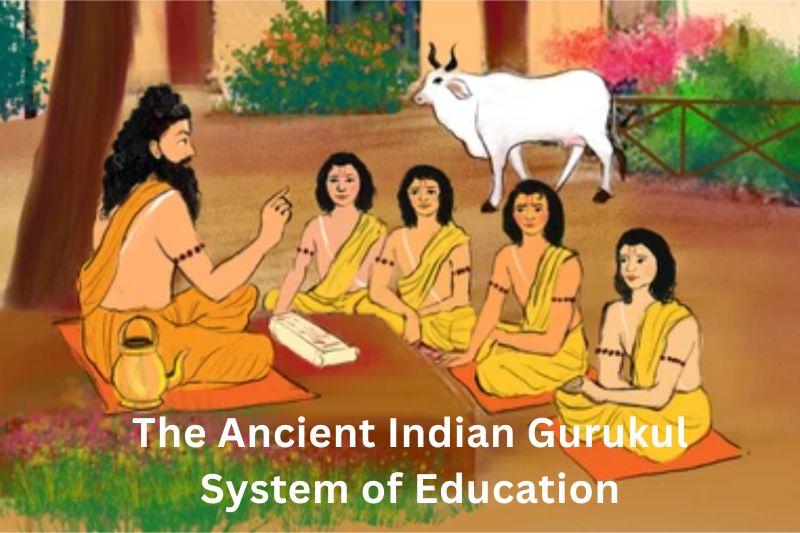
The Gurukul system was the cornerstone of education in ancient India, fostering not just academic excellence but also moral, spiritual, and physical development. Rooted in the Vedic tradition, this system emphasized a close Guru-Shishya (teacher-student) relationship, experiential learning, and life skills that went beyond textbooks.
In today’s fast-paced, exam-oriented education system, revisiting the Gurukul model offers valuable insights into holistic learning, discipline, and sustainable living. This article explores the history, structure, teaching methods, and relevance of the Gurukul system in modern times.
Origin of the Gurukul System
The Gurukul system dates back to 5000 BCE, during the Vedic period. Derived from the Sanskrit words “Guru” (teacher) and “Kula” (family/home), it was a residential schooling system where students lived with their Guru in an ashram-like environment.
Key sources of knowledge included:
- Vedas (Rig, Yajur, Sama, Atharva)
- Upanishads (philosophical teachings)
- Dharmashastras (ethical and legal codes)
- Puranas (mythological and historical texts)
Education was considered sacred, and the Guru was revered as a spiritual guide.
Structure of the Gurukul System
1. Admission Process (Upanayana Ceremony)
- Boys (and in some cases, girls) between 8-12 years underwent the Upanayana (sacred thread ceremony), marking their initiation into formal education.
- Students left their homes to live in the Gurukul, embracing a life of discipline and service.
2. Residential Learning Environment
- Gurukuls were located in forests or remote areas, fostering a deep connection with nature.
- Students (Shishyas) lived as equals, irrespective of social status, and performed daily chores (Seva) as part of learning humility.
3. No Fixed Duration
- Education lasted 12-14 years, depending on the mastery of subjects.
- Graduation was marked by the Samavartana (convocation) ceremony, where students offered Guru Dakshina (a token of gratitude).
Teaching Methods in Gurukuls
1. Oral Tradition (Shruti & Smriti)
- Knowledge was transmitted orally through recitation, storytelling, and debates.
- Emphasis on memorization, critical thinking, and discussion.
2. Experiential & Practical Learning
- Yoga, Meditation, and Martial Arts for physical and mental discipline.
- Agriculture, Astronomy, and Medicine (Ayurveda) for practical skills.
3. One-on-One Mentorship
- The Guru personalized education based on each student’s aptitude.
- Subjects included:
- Vedas & Sanskrit (language, grammar, poetry)
- Mathematics (Ganita) & Astronomy (Jyotish)
- Philosophy (Darshan) & Ethics (Dharma)
- Warfare (Dhanurveda) & Economics (Arthashastra)
Daily Life in a Gurukul
A typical day in a Gurukul was highly disciplined:
| Time | Activity |
|---|---|
| Brahma Muhurta (4 AM) | Wake up, meditation, and prayers |
| 6 AM – 9 AM | Study of Vedas & scriptures |
| 9 AM – 12 PM | Practical skills (farming, weaponry, etc.) |
| 12 PM – 1 PM | Midday meal (prepared by students) |
| 1 PM – 4 PM | Advanced lessons & debates |
| 4 PM – 6 PM | Physical training (yoga, archery) |
| 6 PM – 8 PM | Evening prayers & storytelling |
| 8 PM | Rest |
The Guru-Shishya Relationship: A Sacred Bond
Unlike modern teacher-student dynamics, the Guru-Shishya relationship was deeply personal:
- The Guru was a mentor, parent, and spiritual guide combined.
- No fees were charged—education was considered a divine duty.
- Students served the Guru through Seva (selfless service).
- Trust, respect, and devotion were central to learning.
Gurukul vs. Modern Education System
| Aspect | Gurukul System | Modern Education System |
|---|---|---|
| Focus | Holistic (mind, body, spirit) | Academic & job-oriented |
| Teaching Method | Oral, experiential, mentorship | Textbook-based, standardized |
| Student-Teacher Ratio | 1:1 or small groups | Large classrooms (30-50 students) |
| Evaluation | Mastery-based, no exams | Grading, competitive exams |
| Lifestyle | Simple, nature-connected | Urbanized, tech-dependent |
| Ethical & Spiritual Growth | Integral part | Often neglected |
Relevance of the Gurukul System Today
1. Stress on Holistic Development
- Modern education focuses on grades over wisdom—Gurukuls balanced knowledge, ethics, and life skills.
2. Personalized Learning
- AI and digital tools now allow customized learning paths, similar to Gurukul mentorship.
3. Sustainable Living & Eco-Consciousness
- Gurukuls lived in harmony with nature—a lesson for today’s climate crisis.
4. Revival of Gurukul-Inspired Schools
- Institutions like Shantiniketan (Tagore), Rishi Valley (Krishnamurti) blend Gurukul principles with modern pedagogy.
5. Mental Health & Mindfulness
- Yoga, meditation, and minimalism (practiced in Gurukuls) are now global wellness trends.
How to Integrate Gurukul Principles into Modern Education?
- Mentorship Programs – Encourage teacher-student bonding beyond classrooms.
- Experiential Learning – More field trips, hands-on projects, and vocational training.
- Value-Based Education – Teach ethics, empathy, and environmental responsibility.
- Reduced Screen Dependency – Promote nature immersion and offline learning.
- Community Living – Introduce residential schools with shared responsibilities.
Conclusion: A Call for Balanced Education
The Gurukul system was not just about memorizing texts-it was about building character, resilience, and wisdom. While modern education has its merits, integrating Gurukul-inspired practices can create a more balanced, humane, and sustainable learning model.
By blending ancient wisdom with modern innovation, we can shape an education system that nurtures not just scholars, but enlightened, responsible global citizens.


[…] The Ancient Indian Gurukul System of Education: A Timeless Model for Holistic Learning […]